Introduction: A Gap That Costs More Than We Think
In most organizations, leaders, business, stakeholders and enablers spend significant time and resources trying to “fix” performance. They adjust processes, tweak job descriptions, add checklists, and refine workflows. Sometimes, these changes work. Other times, despite the best operational upgrades, performance barely moves.
Why? Because performance isn’t just about improving the process or redefining the role. It’s about understanding the human system behind the work. Even the most robust processes won’t yield results if the people executing them aren’t ready, capable, or motivated.
This is not a small problem , its the ONLY problem .For example in Operations — the function that turns strategy into tangible output — even a small percentage of low performance compounds across supply chains, customer service metrics, and operational costs. If your dispatch team misses deliveries, if your production floor mismanages capacity, or if your service desk mishandles escalations, the business impact is immediate and visible.
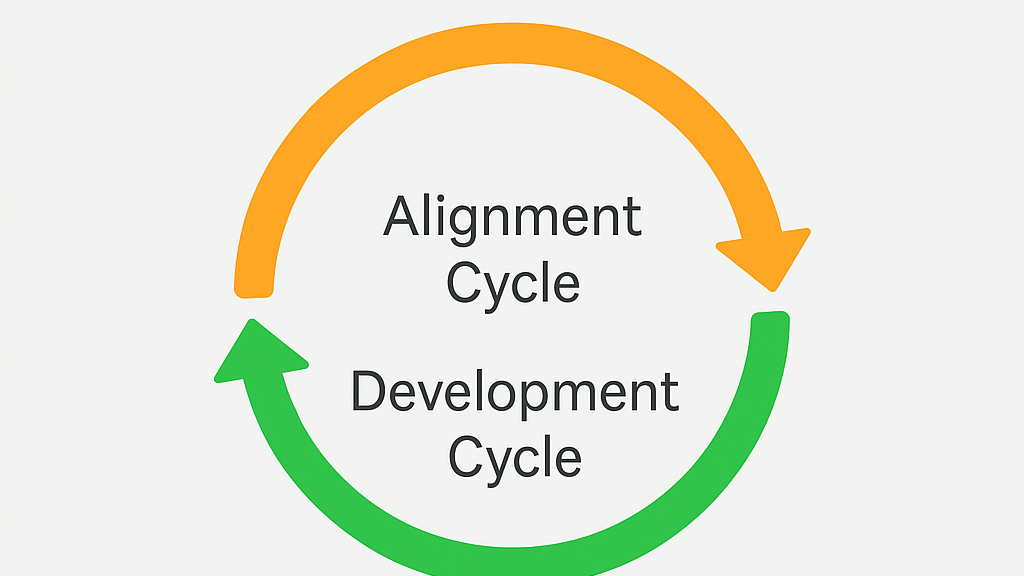
To address this, we need to look deeper—not just at what work is done, but at who is doing it, how they are doing it, and why they are doing it that way. This requires us to explore three aspects: first, what performance actually is, including the dynamics between the learner, the role, and the organizational context; second, how different levels of learners exist based on their uniqueness; and third, how that uniqueness is expressed through the three A’s—Actor, Action, and Act—thereby requiring both alignment and development cycles.
Performance in Organizations
At its core:
Performance = Ability × Motivation × Opportunity
- Ability is the knowledge, skills, and attitudes (KSA) that enable the work.
- Motivation is the internal and external drive to apply that ability.
- Opportunity is the organizational environment, tools, and systems enabling execution.
In Operations, consider a team handling inventory control:
- If a team member understands the system (high ability) but sees no benefit in updating records accurately (low motivation), performance drops.
- If someone is eager to do well (high motivation) but doesn’t know how to manage reorder levels (low ability), errors will still occur.
- Opportunity — the technology platform, process clarity, and access to data — is what allows ability and motivation to translate into output.
The trap many enablers fall into is treating every performance issue as a process problem (Opportunity) when, in fact, the root may lie in Ability or Motivation.
The Six Levels of Learners: Where They Exist and Why They Differ
Across any Operations team, learners exist along a spectrum of ability and motivation. Some are natural drivers of excellence. Others are hesitant adopters, doing the minimum to get by. The difference isn’t luck — it’s a reflection of where they are in their learning readiness and motivation.
- Disengaged Learner – Low ability, low motivation. Avoidant, resistant, and unable to connect learning to role.
- Externally Regulated Learner – Limited ability, driven by rules, rewards, or fear of penalties. Little internalization.
- Introjected Learner – Adequate ability but fragile motivation tied to self-worth or approval. Performance inconsistent.
- Identified Learner – Good ability, sees learning as a means to grow and contribute; needs refinement to excel.
- Integrated Learner – High ability, sees learning as part of identity; needs role challenge, not skill building.
- Intrinsic Learner – High ability, high self-drive; learns for mastery and joy. A model for others.
Levels of Learners based on their Ability and Motivation
These levels are not static. With the right environment, learners can move upward. Without it, they stagnate or regress, eroding the overall performance of the function.
Actor, Action, and Act
To effectively diagnose and address performance, we need a precise language that separates and connects three elements:
- Actor – The individual in the role, shaped by their capability, motivation, values, and potential for growth. The Actor brings uniqueness into the system through their Inner Arch, skills, and competences.
- Action – The set of tasks, behaviors, and methods the Actor chooses and applies in performing the job. Action represents the externalization of the Actor’s cognition—what is known, how it is applied, and why it is pursued in a particular way.
- Act – The role itself, defined by outcomes, goals, and organizational expectations. The Act provides the structure, boundaries, and measures of performance against which Actions are evaluated.
How They Interact
- The Actor shapes the Action: who the Actor is—abilities, beliefs, drive—determines the quality and style of Action.
- The Action delivers the Act: what is done and how it is done directly produces or limits the outcomes expected from the role.
- The Act frames both Actor and Action: the design of the role (its scope, expectations, and resources) influences what Actions are possible and how the Actor aligns or struggles within it.